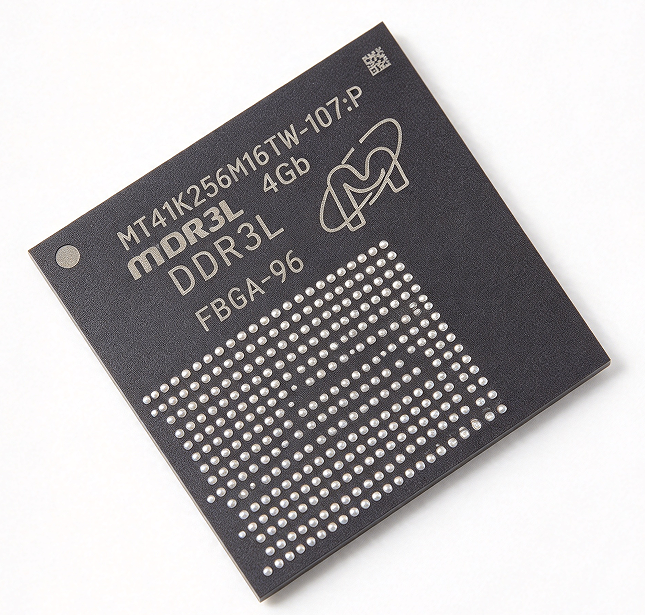
NT5CC128M16IP-DI Availability Report: Market & Stock Trends
Latest inventory snapshots and lead-time feeds show uneven stock and sporadic lead-time spikes for a key DDR3L device, signaling procurement risk for high-volume builds. This report maps availability, pricing movement, and sourcing options for NT5CC128M16IP-DI so US buyers can act quickly. It is based on aggregated supply data and marketplace scans (no supplier names cited).
1 — Part & Market Background: NT5CC128M16IP-DI profile and lifecycle context
1.1 Technical & application snapshot
Point: The device is a DDR3L 2Gb 128Mx16 VFBGA-96 memory IC used in embedded, industrial, and consumer repair markets. Evidence: Aggregate catalog feeds show this density/package pairing concentrated in legacy platform BOMs. Explanation: Procurement impact is high when a design requires the exact voltage, density, and ball-map because package and pin compatibility limit direct substitutes, affecting availability and stock.
1.2 Lifecycle & obsolescence signals
Point: Watch lifecycle indicators closely. Evidence: Catalog feeds and bulletin summaries commonly flag age-related warnings, discontinued-trace markers, or constrained production notes that precede long lead times. Explanation: When lifecycle signals appear, stock tends to shift to aftermarket channels and lead times extend, increasing buyer risk and forcing requalification or redesign if substitutes are unavailable.
2 — Supply-side Trends & Market Drivers
2.1 Production & channel supply signals
Point: Supply patterns are uneven across regions and channels. Evidence: Aggregated inventory snapshots indicate a nontrivial percentage of channels report zero stock while a small set shows limited quantities and raised MOQs. Explanation: Monitor average lead time, percent zero-stock channels, and MOQ changes—sharp increases in zero-stock% or lead times are first-order alerts for procurement action.
2.2 Demand-side drivers affecting availability
Point: Legacy repairs and aftermarket demand drive short-term tightness. Evidence: Repair-market listings and small-quantity sellers often spike when replacement needs concentrate, and aftermarket fills can be short-lived. Explanation: Flags for surges include sudden increases in small-lot listings or premium pricing; buyers should interpret those as potential precursors to broader stock depletion.
3 — Stock & Pricing Deep-Dive for NT5CC128M16IP-DI
3.1 Current stock level patterns by channel
Point: Channel stock is fragmented and geographically dispersed. Evidence: Recent aggregated snapshots show a minority of channels holding available inventory while the majority list backorder or zero quantities; typical MOQs trend upward in scarce pockets. Explanation: For NT5CC128M16IP-DI buyers, this means prioritizing channels with verifiable in-hand stock and tracking geographic distribution to optimize shipping and lead-time exposure.
3.2 Price movement & historical trend indicators
Point: Price volatility correlates with scarcity. Evidence: Spot prices and listing averages show premium spikes when reported available stock falls below typical thresholds; recommended metrics include week-over-week price delta and 90-day high/low. Explanation: Use buy-now premium and price delta triggers to decide between immediate purchases or staged hedges—rapid price increases often precede deeper supply tightening.
4 — Sourcing & Risk-Mitigation Strategies
4.1 Alternative sourcing and cross-reference approach
Point: Validate substitutes rigorously. Evidence: Cross-reference checks that fail on footprint or timing quickly become costly requalification events. Explanation: Follow a checklist—confirm footprint/pinout, timing and speed grades, voltage compatibility, and signal-integrity constraints; run a controlled test plan for “drop-in” feasibility before committing to volume buys.
4.2 Inventory hedging, contract tactics & inspection best practices
Point: Combine contractual and inspection tactics to reduce risk. Evidence: Procurement teams that hedge with phased buys and require authentication see fewer supply shocks. Explanation: Recommend X weeks of consumption as a safety-stock target, phased purchase orders, and contract clauses for firm lead times; insist on visual inspection, traceability paperwork, and targeted testing for aftermarket lots.
5 — Distributor & Aftermarket Case Snapshots
5.1 Channel behavior patterns and risk signals
Point: Channels act predictably under scarcity. Evidence: Observed behaviors include inflated lead-time listings, MOQ hikes, and bundled offers that obscure unit pricing. Explanation: Buyers should watch reporting patterns—sudden lead-time inflation or widespread zero-stock notices are risk signals; avoid bundles that force unnecessary inventory or hide unit costs.
5.2 Aftermarket & repair-market indicators
Point: Aftermarket fills exist but carry authenticity risk. Evidence: Listings from small sellers and refurb channels can provide temporary relief yet lack traceability in many cases. Explanation: For critical builds, require inspection lab reports, certificate of conformity, and sample validation; avoid relying on unverified small-lot sources without authentication steps.
6 — Actionable Buyer Checklist & Monitoring Playbook
6.1 Immediate checklist for procurement teams
Point: Prioritize short-term protective actions. Evidence: Rapid buys and sample inspections reduce immediate fill failures. Explanation: Within 24–72 hours: verify BOM static vs. device, identify qualified alternates, secure short-term buys of available units, request sample inspection and traceability docs, and negotiate MOQ and pricing concessions to stabilize near-term availability and stock coverage.
6.2 Ongoing monitoring & alert setup
Point: Implement automated monitoring. Evidence: Teams tracking days-of-inventory and fill-rate thresholds detect issues earlier. Explanation: Set inventory-scrape cadence, lead-time and price-change alerts, and monthly review KPIs (days of inventory, fill-rate, price delta). Use ERP alerts plus aggregated inventory feeds to maintain actionable visibility without overbuying.
Summary
Recap: Aggregated supply signals indicate fragmented stock and intermittent lead-time spikes for NT5CC128M16IP-DI, creating price and procurement risk for US buyers. Immediate steps reduce exposure: verify in-hand stock, secure short-term coverage, and activate monitoring playbooks tailored to lead-time and price thresholds.
- Confirm device fit and verify available stock before volume buys; tight package/density constraints limit direct substitutes and raise procurement risk.
- Hedge with phased orders and safety stock equivalent to several weeks of consumption; use price-delta and lead-time alerts to time purchases.
- Require inspection and traceability for aftermarket lots; prioritize channels reporting verifiable in-hand inventory to minimize counterfeit or remarking risk.
7 — Frequently Asked Questions
What immediate checks should I run if NT5CC128M16IP-DI stock appears low?
Start by confirming BOM accuracy, checking footprint and voltage compatibility, and requesting physical stock photos and traceability docs. Run a sample functional test and X-ray inspection for critical builds. Prioritize channels with verifiable in-hand inventory and negotiate short lead-time commitments to avoid reliance on aftermarket fills.
How should procurement teams set price and lead-time alerts for stock monitoring?
Configure automated alerts for week-over-week price delta thresholds (e.g., 10–20%) and lead-time breaches beyond target days. Track KPIs such as days-of-inventory, fill-rate, and buy-now premium. Monthly reviews of these metrics allow you to adjust hedge levels and contract terms proactively.
When is it acceptable to use aftermarket sources for repaired or legacy platforms?
Aftermarket is acceptable only after authentication: request traceability documentation, perform visual and X-ray inspection, and validate sample units under real-world operating conditions. Use aftermarket only to bridge short-term needs while securing verified supply or qualifying an alternate through formal requalification.
Why are direct substitutes difficult for NT5CC128M16IP-DI?
The specific density (2Gb), package (VFBGA-96), and voltage (DDR3L) create strict pin-compatibility constraints. Deviations require full signal-integrity requalification, which is costly and time-consuming for embedded systems.