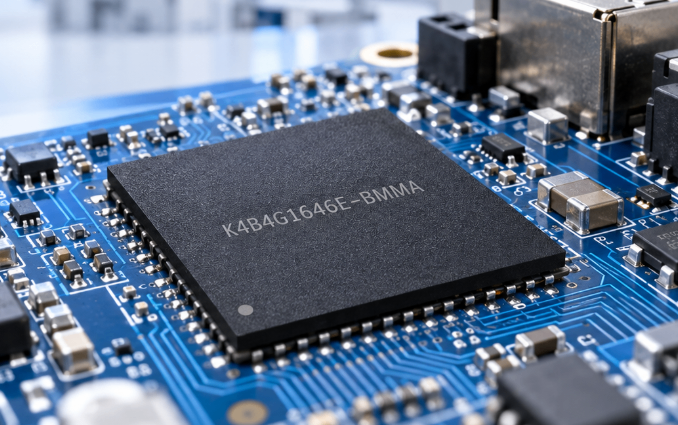
MT29F2G08ABAEAH4-IT:E SLC NAND - Specs & EOL Guide
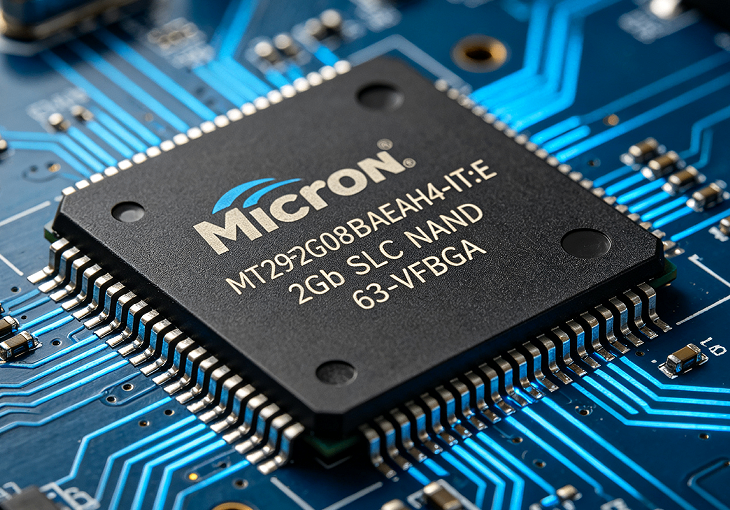
The MT29F2G08ABAEAH4-IT:E is a 2 Gbit SLC NAND device targeted at industrial embedded applications; this guide confirms its key electrical and physical specs, interprets current EOL posture, and gives a pragmatic lifecycle playbook for engineers facing supply transitions. Sources used for validation include the official device datasheet, published lifecycle notices, distributor lifecycle flags, and community validation notes from field engineering—this document synthesizes those inputs into action items.
The guide’s goals are fourfold: confirm spec-level details for fast engineering reference, interpret product-status and EOL signals, assess design and procurement impact, and present migration and lifecycle actions (last-time-buy, validation, and governance). Follow the checklists and matrices below to move from reconnaissance to an executable plan with clear owners and timelines.
1 — Product overview & key specs (background)
MT29F2G08ABAEAH4-IT:E is a 2 Gbit SLC NAND organized as 256M x8 and intended for industrial temperature ranges; the part is commonly used where SLC NAND endurance and retention are required for deterministic embedded storage. The paragraph below and the compact spec table present fields engineers reference daily; confirm the exact datasheet revision before final BOM updates.
— Electrical & physical specifications (what to list)
| Parameter | Value (engineer quick ref) |
|---|---|
| Density / Organization | 2 Gbit (256M x8) |
| I/O Voltage | 3.3 V (industrial single-supply) |
| Bus Width | x8 (parallel NAND) |
| Package / Ball‑Pin Count | TSOP‑48 / 48 pin (confirm datasheet) |
| Operating Temperature | -40 °C to +85 °C (industrial) |
| Page Size | 2048 B main + 64 B spare |
| Pages per Block | 64 |
| Block Size | 128 KB |
| Total Blocks | 2048 (approx, based on 2 Gbit) |
| ECC / ONFI | Host ECC expected; ONFI support varies—confirm in datasheet |
— Performance, endurance & reliability metrics
Key performance and reliability figures for design decisions include typical program latency, erase latency, maximum interface rate, P/E cycle endurance, and data-retention expectations. Typical SLC program times are sub-millisecond ranges and erase times a few milliseconds; industrial SLC endurance is commonly rated for tens to hundreds of kilocycles (P/E). For production, validate read/write timing, power use under load, and retention against your thermal profile.
2 — EOL status & lifecycle timeline (data analysis)
To assess EOL for MT29F2G08ABAEAH4-IT:E, collect manufacturer lifecycle codes and cross-check published lifecycle pages and notices; distributor lifecycle flags and last-time-buy announcements provide corroborating signals. EOL interpretation requires recording status code, notice date, announced last-time-buy deadline, and suggested replacements in a dedicated log to support procurement decisions.
— How to verify EOL status (practical checks)
Verification checklist fields: lifecycle status code (active/obsolescence/end-of-life), date posted (notice timestamp), last-time-buy deadline, production discontinuation date, datasheet revision, and replacement recommendations. Operational checks: archive prior datasheet PDFs, capture distributor “lifecycle” flags, and save screenshots of notices. Keep a dated source log (datasheet rev and notice dates) for audit and release-control purposes.
— Common EOL triggers & timeline patterns
EOL triggers include process consolidation, low demand in legacy designs, and migration to higher-density or multi-level NAND types. Typical timelines run from announcement to discontinuation over several months to a year; last-time-buy windows can be short. Log milestones—announcement, last-time-buy, final ship—and apply conservative buffer months for critical systems to avoid field shortages.
3 — Impact analysis on designs & systems (data analysis / method)
SLC NAND devices like this one affect long-term serviceability, firmware behavior, and BOM risk. Use the following risk matrix and test-focused compatibility checks to prioritize actions by severity and likelihood, and to decide between last-time-buy or redesign strategies.
— Risk matrix for hardware & BOM
| Risk Area | Severity | Likelihood | Mitigation | Owner |
|---|---|---|---|---|
| Supply shortage | High | High | Last-time-buy; multi-sourcing | Procurement |
| Warranty / returns | Medium | Medium | Stock spares; extended inspection | QA |
| Temperature/regulatory | Medium | Low | Qualification testing | Engineering |
| Long-term maintenance | High | Medium | Documented migration path | Product mgmt |
— Technical compatibility risks (pinout, interface, firmware)
Compatibility risks include package pinout differences, voltage/timing mismatches, and controller-level ECC differences that break boot or storage stacks. Recommended minimum tests: signal integrity (SI) checks, power/thermal profiling under worst-case load, and in-circuit boot validation. Suggested timeline: prototype integration (2–4 weeks), full validation (4–8 weeks), production sign‑off (2 weeks), adjusted to project scale.
4 — Replacement & migration strategies (method guide)
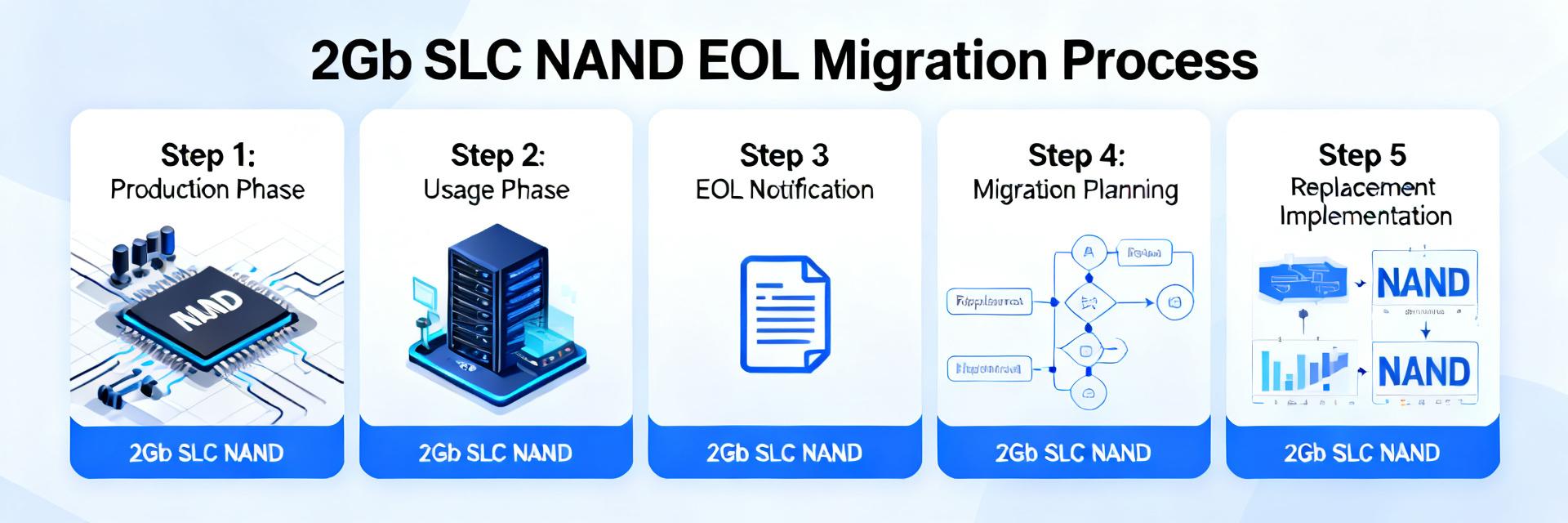
When a drop-in replacement exists, match density, geometry, and electrical specs; otherwise plan firmware/controller adaptation or PCB changes. Use a decision tree approach: drop‑in candidate → firmware tweak → PCB change → redesign. For each step, document firmware impacts and regression tests required to reach parity with the incumbent SLC NAND behavior.
— Finding direct replacements & compatibility checklist
Replacement checklist: match I/O voltage and bus width, page/spare geometry, pages-per-block and total-block mapping, ECC/ONFI compatibility, and thermal/package mechanical fit. If a true drop-in is unavailable, evaluate adapter options or controller firmware that masks geometry differences. Use the long-tail search term MT29F2G08ABAEAH4-IT:E replacement as part of supplier queries and cross-reference candidate datasheets.
— Firmware, controller & validation checklist
Validation items: ECC configuration, wear-leveling and bad-block management, bootloader compatibility, regression test suites, and a field update plan. Provide a validation matrix with pass/fail criteria and estimate engineering effort per path: drop-in candidate (~40–80 hours), firmware tweak (~120–240 hours), PCB redesign (~240–480 hours), full product redesign (project dependent).
5 — Procurement & lifecycle management action plan (action)
For MT29F2G08ABAEAH4-IT:E EOL handling, combine immediate procurement plays with long-term governance. Immediate actions secure runtime continuity; long-term policies reduce future exposure. Record actions with dates, owners, and urgency levels to convert analysis into procurement moves.
— Short-term procurement playbook (urgent actions)
Urgent checklist: confirm remaining certified stock, determine last-time-buy deadlines, place sample and production last-time-buy orders as prioritized by criticality, verify traceability and packaging, and flag BOM entries with EOL status and recommended replacement. Prioritize systems that cannot tolerate field updates and those with long lead validation needs.
— Long-term lifecycle governance & design policy
Recommended governance: formalize multi-sourcing and a qualified-alternative list, schedule periodic lifecycle reviews with a 24–36 month forecast horizon, and assign cross-functional owners (engineering, procurement, QA) with a quarterly review cadence. Embed contractual safeguards (supply commitments, last-time-buy terms) where possible for high-risk components.
Summary
- MT29F2G08ABAEAH4-IT:E is a 2 Gbit SLC NAND (256M x8) with industrial temperature rating and standard 2KB page geometry; confirm exact package and ONFI support against the current datasheet before finalizing BOM decisions.
- The device shows classic EOL signals—manufacturer lifecycle notices and distributor flags—so immediate actions should include inventory verification, prioritized last-time-buy evaluation, and capturing notice dates and deadlines in a lifecycle log.
- Mitigation: perform quick compatibility checks, plan engineering validation (SI, power, firmware), and adopt governance (multi-sourcing, review cadence) to reduce future EOL exposure and maintain service continuity.
Frequently Asked Questions
What are the definitive MT29F2G08ABAEAH4-IT:E datasheet items to confirm before a last-time-buy?
Before placing last-time-buy orders, confirm datasheet revision, exact package type and mechanical drawing, operating temperature spec, page/spare geometry, pages-per-block, total blocks, I/O voltage, and any ONFI or timing parameters that affect your controller. Record the datasheet revision and notice date in your procurement log to support future audit and qualification.
How do I evaluate whether to buy spares or redesign for MT29F2G08ABAEAH4-IT:E EOL?
Score parts by criticality: systems that cannot tolerate field replacement or extended downtime should trigger last-time-buy. Use the risk matrix to score severity and likelihood, estimate validation hours for replacement paths, and weigh inventory carrying costs vs. redesign effort. For critical units, last-time-buy + parallel migration plan is typical.
What minimal validation is needed if replacing MT29F2G08ABAEAH4-IT:E with a candidate SLC NAND?
Minimal validation: verify pinout and power rails, run SI checks at expected clock rates, validate controller ECC and bad-block handling with stress patterns, perform thermal/power profiling, and run a two-week system-level burn-in with real workloads. Pass/fail criteria should be defined in the validation matrix before production sign-off.
What are the key technical specifications of MT29F2G08ABAEAH4-IT:E?
The MT29F2G08ABAEAH4-IT:E is an industrial-grade 2 Gbit (256M x8) SLC NAND flash operating at 3.3V inside a TSOP-48 package. It supports temperature ranges from -40°C to +85°C, with a page size of 2048B + 64B spare, and requires host controller ECC integration.