MTFC32GAKAEJP AIT: 32GB Industrial Grade eMMC 5.1 Managed NAND for Embedded OEM & EMS Sourcing
MTFC32GAKAEJP‑AIT: 32GB Industrial‑Grade eMMC 5.1 Managed NAND for Embedded OEM & EMS Sourcing
Quick Answer
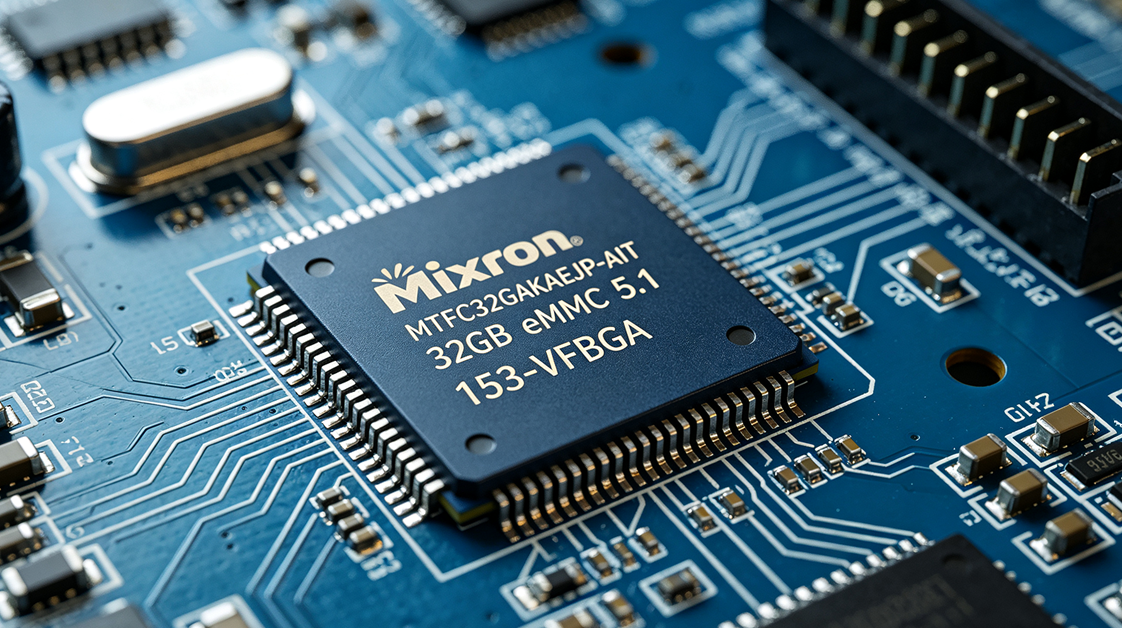
Use MTFC32GAKAEJP‑AIT when your BOM calls for a 32GB JEDEC eMMC 5.1 managed NAND in a 153‑VFBGA package measuring 11.5 × 13 × 0.9 mm. Micron published sequential read performance up to 300 MB/s and an industrial operating‑temperature range of −40 °C to +85 °C; always confirm part revision, lot condition, date‑codes and lifecycle status before placing volume orders.
Introduction
MTFC32GAKAEJP‑AIT is a Micron managed‑NAND eMMC device integrating 32 GB flash memory and on‑board eMMC controller within a compact 153‑VFBGA surface‑mount package. Its JEDEC e‑MMC 5.1 interface and HS400 capability reduce host‑side firmware overhead for embedded hardware designs. For today’s electronic‑component procurement managers, OEM and EMS buyers, its primary value is industrial‑grade environmental robustness paired with validated part continuity for both new embedded designs and existing frozen‑BOM platforms, supported by strict lot‑source verification and incoming‑quality controls. It is a board‑soldered storage component rather than a removable memory card or standalone SSD.
Product Overview and Positioning
Core conclusion first: MTFC32GAKAEJP‑AIT is an industrial‑grade 32 GB managed‑NAND eMMC built for embedded systems requiring wide‑temperature operation, intended for new product development as well as legacy‑platform sustainment where drop‑in substitutions carry integration risk.
Fully compliant with JEDEC e‑MMC 5.1 specification, the internal controller handles raw‑NAND housekeeping tasks: bad‑block remapping, dynamic wear‑levelling and hardware ECC error correction. Host systems only execute standard eMMC command sets instead of implementing low‑level NAND management logic.
Manufactured on Micron proven NAND process technology, this part targets industrial, IoT and commercial embedded equipment. Even though alternate 32 GB eMMC chips exist on the market, matching advertised capacity or eMMC version alone does not guarantee equivalent boot behaviour, power‑loss response, ball‑map assignment or thermal performance. Engineering teams must validate any proposed substitute against the original design requirements.
Four Key Advantages for Industrial Embedded Platforms
- On‑Chip Managed eMMC Controller Architecture
Core conclusion first: The integrated flash controller offloads complex NAND‑management work from host processors while retaining dependency on host hardware, boot‑ROM and OS firmware compatibility.
Built‑in bad‑block management, wear‑levelling and ECC reduce R‑D firmware burden for OEM and EMS projects. Compatibility still depends on host controller capabilities, boot initialization sequence, operating‑system driver implementation and board signal integrity. A matching part number does not eliminate all integration validation requirements.
- HS400 High‑Bandwidth eMMC 5.1 Performance
Core conclusion first: Micron‑published HS400 sequential read up to 300 MB/s delivers higher throughput for OS booting, log streaming and media‑heavy embedded workloads.
These figures represent manufacturer lab test conditions and are not guaranteed real‑world application throughput. Actual delivered speed varies with host controller quality, PCB layout, driver configuration and mixed read‑write workload patterns. Sequential‑write lab performance reaches 150 MB/s under HS400 mode.
- Industrial‑Grade Wide‑Temperature Compact Package
Core conclusion first: 11.5 × 13 × 0.9 mm thin 153‑VFBGA footprint supports compact embedded PCB layouts alongside −40 °C to +85 °C full industrial operating range.
The fixed 153‑ball VFBGA mechanical outline is critical for both new designs and BOM‑locked legacy hardware. Package height, ball assignment and reflow profile must be reviewed during component selection or substitution work. Its industrial temperature rating supports deployment inside factory floor equipment, outdoor IoT nodes and thermally‑uncontrolled enclosures.
- Multi‑Mode Standardised eMMC 5.1 Interface
Core conclusion first: Supports ×1, ×4 and ×8 bus‑width operation modes to accommodate a broad range of embedded host‑controller hardware generations.
JEDEC e‑MMC 5.1 brings expanded command sets, power‑management features and improved HS400 signal timing. Buyers should note that conformance to the published eMMC 5.1 standard does not guarantee identical power‑fail resilience or boot timing between different vendor parts; preserve the exact approved MPN whenever project qualification cost is high.
Technical Parameters and Procurement Interpretation Table
|
Parameter |
Published value |
Procurement meaning |
|
Manufacturer |
Micron Technology |
Verify die marking, branding and full‑part suffix; avoid relying purely on marketplace listing titles |
|
Capacity |
32 GB (256 Gbit managed NAND) |
Confirm host‑visible usable capacity accounting for internal over‑provisioning |
|
Interface |
JEDEC e‑MMC 5.1 with HS400 |
Requires host controller, boot‑ROM and driver validated for eMMC 5.1 HS400 operation |
|
Performance |
Seq Read up to 300 MB/s; Seq Write up to 150 MB/s (HS400 lab conditions) |
Lab benchmark; real‑world system throughput will vary with hardware and software stack |
|
Package |
153‑VFBGA |
Cross‑reference ball‑map, footprint and PCB reflow profile before evaluating alternatives |
|
Dimensions |
11.5 × 13 × 0.9 mm max |
Check mechanical enclosure height constraints for target end‑equipment |
|
Operating Temperature |
−40 °C to +85 °C |
Industrial temperature rating; do not infer full automotive AEC‑Q100 qualification without formal documents |
|
Supply Voltage |
Vcc 2.7‑3.6 V; Vccq 1.7‑1.95 V / 2.7‑3.6 V |
Must align with target board power‑rail design specifications |
Note: Use this table for BOM screening and RFQ preparation. Final engineering release shall reference the official Micron datasheet for MTFC32GAKAEJP‑AIT and exact part suffix.
Suitable Application Scenarios
Image 3: Component incoming inspection lab concept for industrial‑grade eMMC receiving and traceability validation alt‑text: Electronics incoming quality‑control lab for industrial eMMC visual inspection, X‑ray sampling and lot traceability for MTFC32GAKAEJP‑AIT sourcing
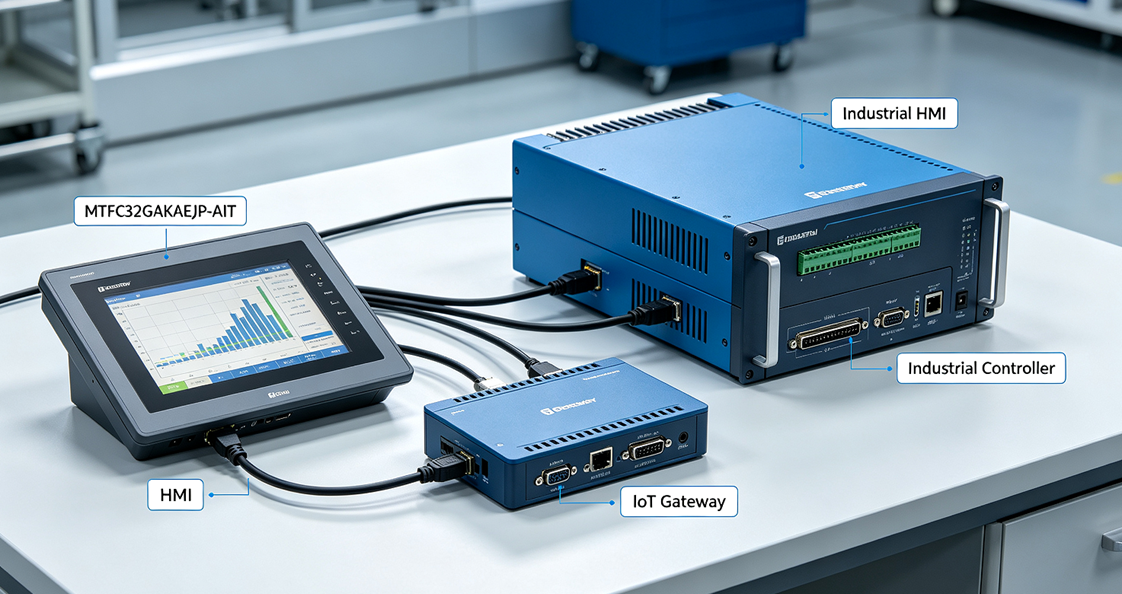
Industrial HMIs & Real‑Time Embedded Controllers
Industrial human‑machine interfaces, compact process controllers and data‑acquisition terminals deploy this device for boot images, operating‑system storage, runtime configuration and event log persistence. Always validate expected write endurance workload, thermal operating envelope, power‑failure recovery workflow and error‑handling procedures before volume production release.
IoT Gateways & Remote Field‑Deployed Devices
Network gateways, edge‑computing nodes and outdoor IoT sensor hubs benefit from wide‑temperature resilience and high sequential read bandwidth. Remote unattended hardware places heavy emphasis on power‑loss robustness and long‑term storage reliability; define appropriate sampling test plans during incoming inspection.
Digital Signage and Special‑Purpose Embedded Kiosk Systems
Industrial‑grade digital signage players and specialised kiosk hardware use soldered eMMC for local application binaries and cached media content. Do not select components based only on headline capacity or interface version; validate real‑world read‑write duty‑cycle requirements for your specific use‑case.
Buyer Pain Points and Practical Responses
|
Pain point |
Practical response |
|
Supplier offers alternate “functionally‑equivalent” 32 GB eMMC as direct drop‑in replacement |
Compare ball‑map, package dimensions, power‑loss behaviour, boot timing and firmware compatibility; mandate engineering validation before BOM modification |
|
Unclear lifecycle status for MTFC32GAKAEJP‑AIT |
Request manufacturer‑channel lifecycle statements and dated quotations; third‑party component databases shall not be treated as authoritative end‑of‑life notifications |
|
Available stock includes older date‑code material with unknown storage history |
Audit lot codes, dry‑pack / MSL‑3 moisture‑bag status, bake history and solderability risk; establish risk‑based incoming‑inspection sampling rules |
|
Marketing materials quote maximum 300 MB/s as guaranteed system‑level throughput |
Treat 300 MB/s as HS400 manufacturer lab‑test result; communicate realistic performance expectations to hardware and software engineering teams |
|
Insufficient component traceability from broker‑origin stock |
Enforce supplier qualification, component label photographs, lot documentation and risk‑adjusted incoming‑inspection workflow for industrial‑grade orders |
Lifecycle and Incoming Quality‑Control Guidance
Core conclusion first: Confirm formal lifecycle status prior to committing MTFC32GAKAEJP‑AIT to large‑volume production orders.
Public third‑party component databases may contain conflicting status information. Procurement teams must obtain supporting evidence from franchised or authorised supplier channels rather than trusting aggregated web‑scraped data as official Micron notifications.
A practical incoming‑control workflow for MTFC32GAKAEJP‑AIT should include these steps:
- MPN, suffix, lot‑code and date‑code label‑and‑document review
- Visual package and marking inspection
- Risk‑weighted X‑ray sampling to verify ball‑joint condition for aged lots
- Moisture‑barrier bag and humidity‑indicator checks for MSL‑3 sensitive devices
- Reflow / bake procedure planning for older date‑code inventory
- Application‑specific electrical and boot‑function sampling validation
Inspection strictness scales with supplier risk level, lot age, total order quantity and end‑equipment criticality.
Frequently Asked Questions (FAQ)
Q1: What storage capacity does MTFC32GAKAEJP‑AIT provide? A1: It is a 32 GB (256 Gbit) managed‑NAND eMMC device. Host‑visible usable capacity is slightly lower due to internal over‑provisioning required for NAND management functions.
Q2: What eMMC specification does MTFC32GAKAEJP‑AIT follow? A2: It complies with JEDEC e‑MMC 5.1 and supports HS400 high‑speed bus‑operation mode.
Q3: Is 300 MB/s guaranteed real‑world read throughput? A3: The 300 MB/s sequential‑read value is a manufacturer HS400 lab benchmark. Actual system performance depends on host controller hardware, PCB signal integrity, driver software and workload patterns, requiring system‑level validation.
Q4: Can any other 32 GB eMMC serve as direct drop‑in replacement? A4: No. Differences in ball‑map assignment, package height, boot timing and power‑loss response can break validated embedded platforms. Full hardware‑firmware qualification is mandatory before approving any substitute component.
Q5: Does the −40 °C ~ +85 °C rating mean it is automotive AEC‑Q100 qualified? A5: The industrial temperature rating alone does not imply automotive‑grade qualification. Request formal qualification documentation if you intend to deploy within automotive assemblies.
Q6: What information should be included in an RFQ for MTFC32GAKAEJP‑AIT? A6: Submit full exact MPN including suffix, order quantity, required delivery date, shipping destination, acceptable date‑code range, packaging preferences (tray / tape‑and‑reel), traceability requirements, inspection criteria, and explicitly state whether alternate component proposals are permitted.
Q7: What are the primary intended applications for MTFC32GAKAEJP‑AIT? A7: Industrial HMIs, embedded controllers, edge IoT gateways and industrial digital‑signage hardware; suitable both for new industrial designs and sustainment of existing qualified platforms.
Request a Project‑Specific Quote
MTFC32GAKAEJP‑AIT is best evaluated for projects requiring 32 GB industrial‑grade eMMC 5.1 managed‑NAND storage in the 153‑VFBGA footprint, for either new‑product development or frozen‑BOM sustainment. Send our sales team target quantity, required delivery schedule, end‑application description, acceptable date‑code constraints and incoming‑inspection requirements. Confirm exact‑part availability, lot traceability, packaging condition and formal delivery terms before issuing purchase orders.
Technical Sources
Micron official datasheet for MTFC32GAKAEJP‑AIT. View source Micron eMMC 5.1 specification documentation. View source